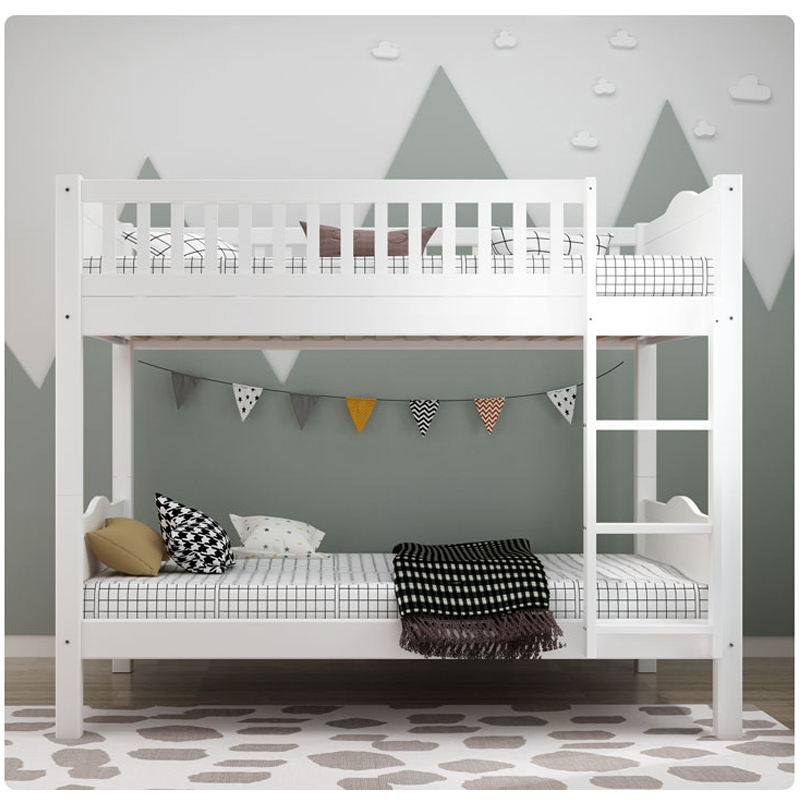
Bunk beds are among the most appealing pieces of furniture for a child’s room. They are not only a perfect space-saving solution but also bring a sense of adventure and “secret base” fun to the children. However, any elevated structure where children sleep and play naturally raises safety concerns for parents.
Buying a bunk bed is a major decision that involves size, material, function, and, most importantly, structural safety. Our goal is to provide you with a complete guide so you can make your purchase confidently while ensuring your children’s safety.
Are Bunk Beds Safe for Kids?
Yes, bunk beds are very safe for children, provided they are bought and used correctly. Most injuries related to bunk beds do not come from structural failure but from falls during play or improper use. Therefore, as a parent, you need to understand product safety standards and family use rules.
Globally, the U.S. Consumer Product Safety Commission (CPSC) and ASTM International standards are the gold standard for judging bunk bed safety. These standards strictly regulate the height, gaps, mattress support, and structure of the ladder. A trustworthy children’s furniture supplier will ensure their products comply with these rules, minimizing risks. You should look for relevant safety certification labels when you buy.
To ensure your children use bunk beds safely, here are 5 key safety points you must check and follow:
- Continuous Guardrails: Whether the bunk bed is against a wall or free-standing, the top bunk’s guardrails must go around all four sides. The only opening allowed is the ladder entry. The guardrail must be at least 5 inches (about 12.7 cm) above the mattress surface.
- Secure Ladders: The ladder or steps must be firmly attached to the bed frame. If the ladder is movable, it must stay stable when in use, and the bottom should have an anti-slip design.
- Correct Mattress Thickness: The mattress cannot be too thick. If it is too thick, the child’s head or body might go over the effective protection height of the guardrail. You must choose the mattress based on the maker’s advice.
- Gaps to Prevent Head Traps: Any opening between the guardrail posts or between the guardrail and the headboard cannot be wider than 3.5 inches (about 9 cm). This rule is to stop a child’s head from getting stuck by accident.
- Right Placement: Never place the bunk bed next to windows, ceiling lamps, or ceiling fans. Any cords (like curtain cords) that a child might reach at night must be moved away.
At what Age Can Kids Sleep in a Bunk Bed?
At what age should kids sleep in a bunk bed? Usually, the U.S. CPSC suggests that children under the age of six should not sleep in the top bunk. This is because kids under six do not have fully developed judgment and coordination when they wake up at night. This makes it easier for them to fall while climbing or sleeping.
The official six-year recommendation is a good start. But it is only a guide, not a strict rule. The truth is that some five-year-olds might be more ready for the top bunk than some seven-year-olds. To help you make the right choice, look at these key points:
- Nighttime Bathroom Use: Can your child climb down the ladder alone, use the bathroom, and get back into bed at night without help?
- Calm Sleep: Does your child toss and turn a lot, sleepwalk, or have night terrors? These actions greatly raise the risk of falling.
- Respect for Rules: Can your child understand and strictly follow the rule: “No playing or jumping on the top bunk”? Respecting the rules is the base of safety.
- Easy Climbing: Can your child climb up and down the ladder easily without an adult’s help?
How to Pick the Right Bunk Bed for Your Child?
1. Consider and Clarify Your Actual Needs
Younger children may prefer a lower bunk bed that’s easier to get in and out of, while older children may enjoy the novelty of sleeping on the top bunk. Consider whether your child needs additional safety features, such as guardrails or stairs with handrails.
Some bunk beds come with built-in storage drawers, shelves, or trundle beds, which are useful for maximizing space in a child’s room.
2. Material and Durability
The durability and safety of a bunk bed depend a lot on the material used to make it. The most common choices you will find are solid wood and metal. This choice depends on your budget, the room’s style, and how long you expect the bed to last.
| Material | Pros | Cons |
| Solid Wood | Strong build, classic look, quieter, many color and finish choices. | Higher price, heavier to move, needs more careful care, easy to scratch or wear down. |
| Metal | Lighter, often cheaper, slimmer design, very strong and easy to clean. | Can make squeaky noises, fewer style choices, may look “industrial.” |
No matter which frame material you pick, you must think about the weight limit for both the mattress and the frame. The top bunk usually holds less weight than the bottom one. This is key if you plan for an adult to use the bottom bunk sometimes. For the mattress, choose a medium-firm foam or spring mattress for good support. More importantly, you must follow the maker’s rules for mattress thickness. This makes sure the guardrail works as it should.
3. Choose the Right Bunk Bed Size
| Twin over Twin Bunk Bed | This is one of the most popular sizes, featuring two twin-sized beds stacked on top of each other. | 75 in × 39 in |
| Twin over Full Bunk Bed | The top bunk is a twin-sized bed, while the bottom bunk is a full-sized bed. | Twin bed: 75 in × 39 in Full bed: 75 in × 54 in |
| Full over Full Bunk Bed | Features two full-sized beds stacked on top of each other. | 75 in × 54 in |
| Twin over Queen Bunk Bed | The top bunk is a twin-sized bed, while the bottom bunk is a queen-sized bed. | Twin bed: 75 in × 39 inQueen bed: 80 in × 60 in |
The above are common bunk bed sizes. Before you buy bunk beds, you need to carefully measure two key sizes: the room’s height and the bed’s length.
Ceiling Height: You must leave enough clear space between the bed and the ceiling. It is usually best to have at least two feet (about 60 cm) of space from the top mattress to the ceiling. This is not just so your child does not hit their head when they sit up. It also gives enough airflow. Rooms with lower ceilings may need a low-profile bunk bed design.
Bed Footprint: You also need to think about whether the bed’s length is right for the room. Standard sizes include Twin-over-Twin or the larger Twin-over-Full. The Twin-over-Full size has a wider bottom bed. This works well for siblings with a large age gap or for guests who stay the night. When you measure, remember to leave extra room for the ladder.
What Are the Common Children’s Bunk Bed Styles?
Bunk Bed with Desk
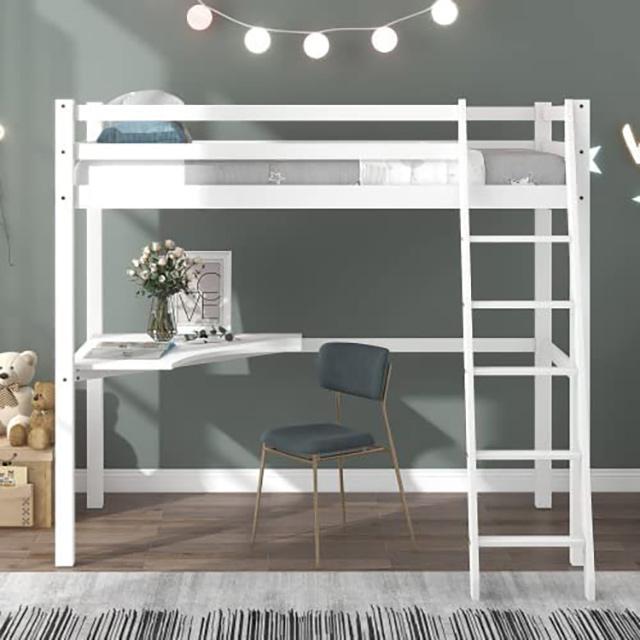
This is often called a Study Loft Bed. It lifts the sleeping area high up and uses the space below fully for studying. The best design builds the desk into the bed frame. It has plenty of desk surface and drawers. It creates a quiet study spot in a very small part of the room, away from things that can distract them. Some designs even let you pull the desk out or push it back in for more flexibility.
Application Scenarios: Bunk beds with desks are ideal for children’s bedrooms, teen rooms, or dormitories where space is limited. These beds are especially suitable for students who need a quiet and organized space for homework, studying, or creative activities.
Children’s Bunk Beds with Slide
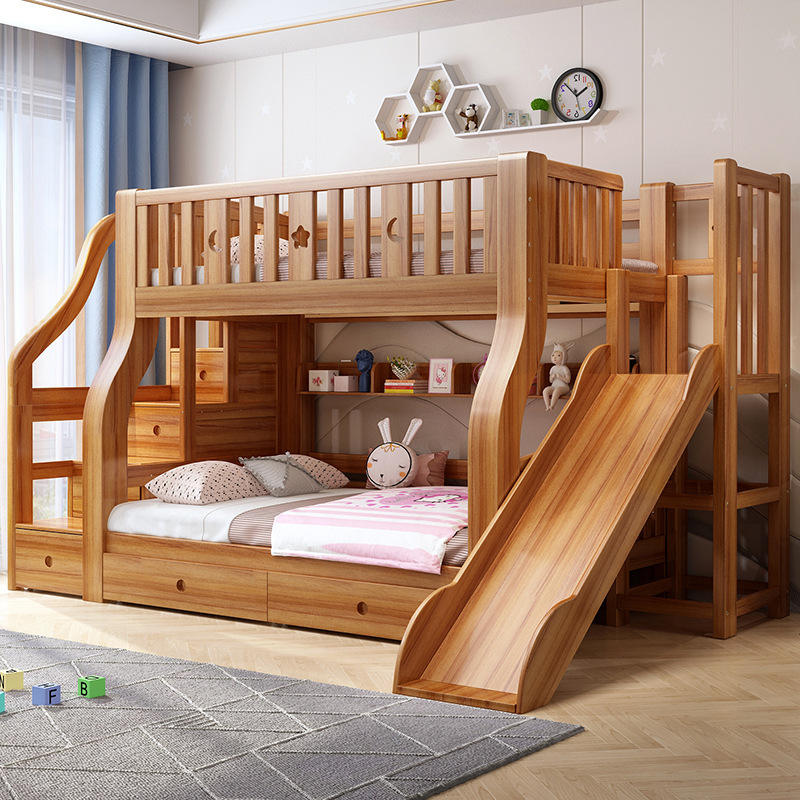
This is a bunk bed that will make kids squeal with excitement. Which kid wouldn’t want to have his or her slide in the room? They can freely arrange their playtime, and they can also invite their best friends to play together. These beds typically feature an attached slide that allows children to safely and easily exit the top bunk. These beds often come in playful designs and vibrant colors to appeal to children’s imaginations.
Application Scenarios: Bunk beds with slides are perfect for children’s bedrooms or playrooms. These beds are particularly popular in households with younger children who may be transitioning from a crib to a bed, as the slide provides a fun incentive for them to sleep in their own space.
Bunk Bed with Storage Stairs
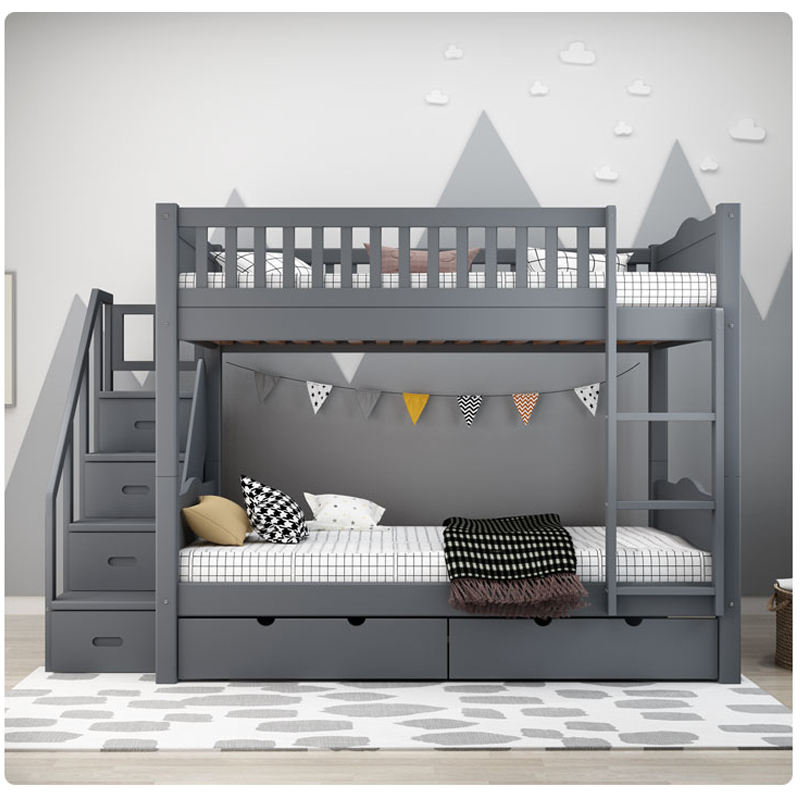
If safety is your main concern, this style is a huge upgrade. The old straight ladder is replaced by a set of strong, easy-to-climb stairs. These stairs give a wider step and handrails, which greatly lowers the risk of falling at night. Also, deep drawers or storage units are often built inside each stair step. This solves the storage problem in a child’s room. It is great for holding clothes, books, or toys.
Application Scenarios: Bunk beds with storage stairs are ideal for children’s bedrooms or shared spaces where storage is limited. They provide multiple storage spaces while also serving as a safe and easy-to-use access point to the top bunk.
Low Bunk Bed
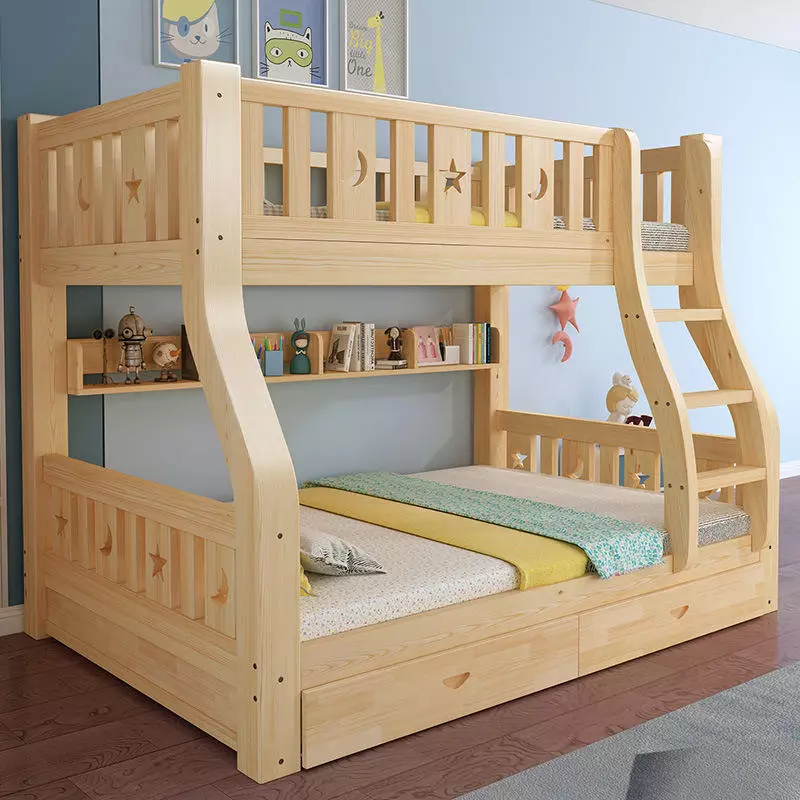
A low bunk bed is designed with both the top and bottom bunks positioned closer to the ground compared to traditional bunk beds. This design is particularly suitable for younger children or rooms with low ceilings. Low bunk beds typically feature a shorter height between the bunks, making it easier for children to access both sleeping surfaces safely. This type of bed is also very Montessori-style. The low height promotes independence and freedom of movement.
Application Scenarios: It is ideal for children’s bedrooms, preschools, or daycare facilities where safety and accessibility are a priority.
Is It Necessary to Make Custom Bunk Beds for Children?
For most families, the ready-made bunk bed styles on the market are enough. But in some cases, choosing custom bunk beds is not just a fancy choice. It is the best way to solve space and function problems. Customization becomes needed when standard answers cannot meet your family’s unique needs.
Custom design offers a smooth answer in these non-standard cases:
Odd Room Shapes: If your child’s room has slanted ceilings, strange corners, or built-in heaters, a custom bed makes sure the bed fits perfectly into these tough spaces.
Specific Storage Needs: You might need a special storage design. This could be shelves that must match a wall niche’s depth. Or, you might need a certain-sized closet built into the bed frame.
Multi-Use Design: If you need to join the bed, a desk, and even an indoor climbing wall (or play area) into one structure, custom-making it is the only way to get this multi-purpose use.
A Bolder Idea: Built-In Bunk Bed for Your Kids
If you want the best use of space and design, the built-in bunk bed is a bold idea worth thinking about. Unlike furniture that stands alone, a built-in bed is part of the room’s structure. It offers safety and beauty that a regular bunk bed cannot match.
A built-in bunk bed is made by fixing it to the walls and floor forever. This means they are naturally stronger and more stable than any free-standing bunk beds. This structural safety is the biggest plus of the built-in design. Also, it looks like a custom part of the building, not furniture added later.
However, the bad points of built-in beds are less flexibility and higher initial costs. Once it is built, it is hard to move or change it. Built-in beds need professional carpenters and designers. The cost is higher than buying a ready-made bed.
When designing a built-in bunk bed, you must think about lighting and airflow. Make sure each bed has its own reading light that is easy to adjust. At the same time, do not close off the bed completely. This keeps the air moving and the space comfortable.
Tips for the Safe Use of Bunk Beds
Experts suggest that families should see the following rules as a strict must-do. Children should fully understand what happens if they break the rules:
Age appropriateness: It’s essential to consider the maturity and developmental stage of the children who will be using the bunk bed. Younger children might not yet possess the necessary responsibility to safely sleep in a top bunk.
Only for Sleeping: The top bunk is only for sleeping. Playing, jumping, wrestling, or other acts that could cause a loss of balance are strictly not allowed on the top bunk.
One Person Per Bunk: Unless the bed is clearly designed for two people (Full-over-Full), the top bunk is only for one person. It is not allowed for many children to crowd the top bunk.
Head Towards Ladder: Always make sure the child sleeps with their head toward the ladder or steps. This way, if they wake up at night, they will naturally move toward the safe exit.
Night Light is a Must: Put a low-watt night light near the ladder. Light at night is key for a child to safely climb up and down.
No Hanging Items: Never hang cords, belts, scarves, or bags from any part of the top bunk. This can cause a choking hazard.
Getting in and out of the top bunk safely: Discourage children from climbing or jumping onto the top bunk from other furniture or surfaces. Teach children to wait for the person ahead of them to climb up or down the ladder before starting their ascent or descent.
Conclusion
Bunk beds are great furniture for saving space and helping a child’s imagination grow. You can make the best choice with confidence. You do this by learning about the safety rules, picking the right age for your child, and choosing the style that fits your needs. This could be a desk design or a safe, low bunk bed. Remember, safety always comes first. Checking the bed often and using strict home rules make sure your children can enjoy their bunk beds safely and happily.
About the Author
This guide is brought to you by Clafbebe. We are an expert manufacturer and exporter of children’s furniture. We focus on giving top-quality bulk custom and making services to world brands, stores, and designers. We treat product safety with the “heart of a parent” and use the “hand of a master” to make sure every piece of furniture is useful and long-lasting.
Recommended Related Articles:
- Bunk Bed: Maximizing Space and Comfort
- Top 15 Bunk Bed Manufacturers
- Best Children’s Bunk Beds of 2025
- What Size Mattress for Bunk Beds?
- Wholesale Bunk Beds: 2025 Distributors & Retailers Guide
- Bunk Bed Weight Limit: What You Need to Know
- Understand Different Types of Bunk Beds
- 18 Bunk Bed Ideas: Bring Comfort and Fun to Any Room